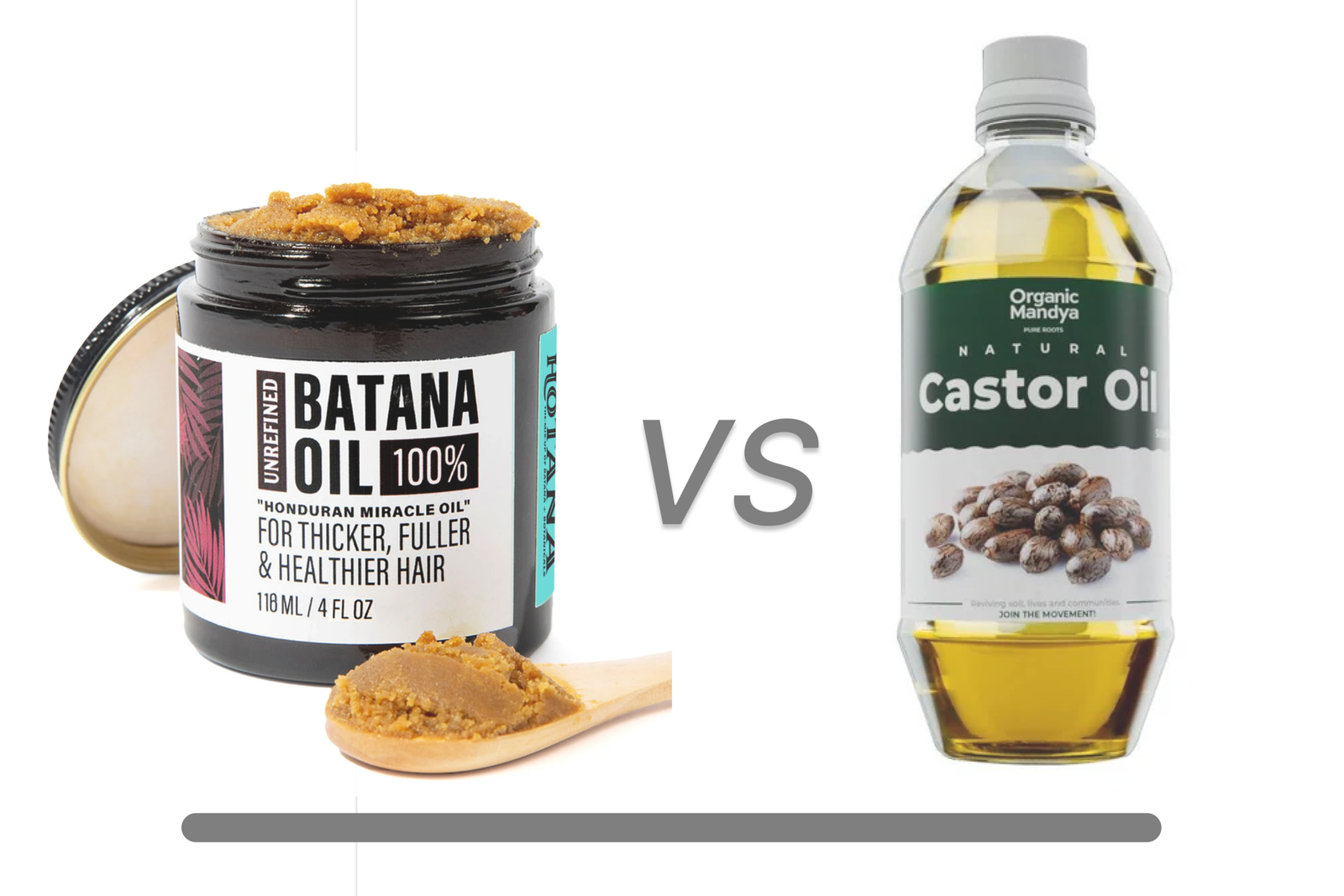
Batana Oil vs Castor Oil
Have you ever stood in the beauty aisle — or scrolled endlessly online — trying to figure out which oil is actually worth your money? You’re not alone. The debate of Batana Oil vs Castor Oil is one of the hottest conversations in the natural hair care world right now. Both oils promise luscious locks, a healthier scalp, and glowing skin. But they work in very different ways.
In this complete guide, we’ll break down everything you need to know — from origins and ingredients to hair growth, skin benefits, and who should use which. Whether you’re a die-hard castor oil fan or newly obsessed with the Honduran “miracle oil,” by the end of this post you’ll know exactly which one (or both!) belongs in your routine.
Table of Contents
- What Is Batana Oil?
- What Is Castor Oil?
- Key Ingredients & Nutritional Profile
- Batana Oil vs Castor Oil: Head-to-Head Comparison
- Hair Growth: Which One Wins?
- Moisturizing & Hydration
- Scalp Health
- Skin Benefits
- Texture & Ease of Use
- Side Effects & Safety
- Best Hair Types for Each Oil
- Can You Use Both Together?
- How to Use Each Oil
- Quick Comparison Table
- The Verdict: Which Should You Choose?
- Frequently Asked Questions
1. What Is Batana Oil?
Batana oil is a rich, unrefined oil extracted from the nuts of the American palm tree (Elaeis oleifera), which grows abundantly in the tropical rainforests of Central America — particularly Honduras. It is sometimes called “American palm oil” or “ojon oil.”
The Indigenous Secret
For centuries, the indigenous Miskito people of Honduras (sometimes called “La Moskitia”) have used batana oil as a staple in their beauty rituals. Revered as a sacred oil, it was traditionally applied to the hair and skin by both men and women to maintain thick, shiny, jet-black hair even into old age. The Miskito people reportedly experienced very little hair loss and remarkably lustrous hair — a phenomenon widely attributed to their regular use of batana oil.
This ancient tradition caught the attention of the modern beauty world, and batana oil has since exploded in popularity, being called the “miracle oil from Honduras” by hair care enthusiasts worldwide.
What Does It Look Like?
Raw, unrefined batana oil has a distinctive dark reddish-brown to chocolatey color and a thick, paste-like consistency at room temperature. It melts into a smooth, silky oil when it touches warm skin. It has a warm, earthy scent — often described as similar to dark coffee or chocolate, which many users find pleasant.
2. What Is Castor Oil?
Castor oil is one of the oldest and most widely used beauty oils in the world. It is extracted from the seeds of the castor plant (Ricinus communis), a plant native to East Africa and India that now grows widely across tropical and subtropical regions globally.
A Long History of Use
Castor oil has been used for thousands of years — dating back to ancient Egypt, where it was used in oil lamps and for skin care. Over centuries, it became a go-to remedy across Africa, Asia, and the Caribbean for thick hair, strong eyelashes, and healthy skin. Today, it remains a staple ingredient in countless cosmetic products worldwide.
What Does It Look Like?
Cold-pressed (unrefined) castor oil is a pale yellow, very thick and viscous liquid. Refined castor oil is clear and odorless. Jamaican Black Castor Oil — a popular variant — is dark brown and has a smoky, nutty scent due to the roasting of castor beans before pressing.
3. Key Ingredients & Nutritional Profile
Understanding the chemistry behind each oil helps explain why they do what they do.
Batana Oil — What’s Inside?
| Compound | Role |
|---|---|
| Oleic Acid (Omega-9) | Deep penetration, moisturization, repairs hair shaft |
| Linoleic Acid (Omega-6) | Strengthens hair follicles, reduces inflammation |
| Tocopherols (Vitamin E) | Powerful antioxidant, protects hair from oxidative stress |
| Phytosterols | Promotes scalp health, reduces inflammation |
| Beta-Carotene (Pro-Vitamin A) | Repairs damaged cells, stimulates growth |
| Carotenoids | UV protection, antioxidant properties |
Batana oil’s fatty acid profile is remarkably similar to the lipid composition of the hair shaft itself, which is why it is able to penetrate deeply and rebuild from within.
Castor Oil — What’s Inside?
| Compound | Role |
|---|---|
| Ricinoleic Acid (~85–90%) | Unique fatty acid; boosts blood circulation to scalp, anti-inflammatory |
| Oleic Acid | Moisturization and softening |
| Linoleic Acid | Anti-inflammatory, strengthens hair |
| Vitamin E | Antioxidant, nourishment |
| Proteins | Strengthens and repairs hair strands |
Castor oil’s most defining ingredient is ricinoleic acid — a hydroxyl fatty acid not commonly found in other oils — which is largely responsible for its powerful scalp-stimulating properties.
4. Batana Oil vs Castor Oil: Head-to-Head Comparison
Before we dive into each category, here’s a snapshot of how the two compare across the most important dimensions:
| Feature | Batana Oil 🌴 | Castor Oil 🫒 |
|---|---|---|
| Origin | Honduras (American Palm) | Africa / India (Castor Plant) |
| Primary Action | Repairs, penetrates & heals | Coats, seals & stimulates |
| Texture | Rich paste, melts smoothly | Very thick & sticky liquid |
| Color | Dark reddish-brown | Pale yellow (clear if refined) |
| Scent | Warm, earthy (like coffee/chocolate) | Mild to odorless |
| Penetration | Deep — reaches hair cortex | Surface-level — coats cuticle |
| Key Nutrient | Tocopherols, Oleic + Linoleic Acid | Ricinoleic Acid |
| Best For | Damaged, dry, brittle hair | Thinning hair, hair loss |
| Skin Use | Yes — acne, hyperpigmentation | Yes — moisturizing, healing |
| Hair Types | All types, especially damaged | All types, especially thinning |
| Availability | Specialty stores, online | Widely available everywhere |
| Price | Moderate–High | Low–Moderate |
5. Hair Growth: Which One Wins?
This is the big question everyone is asking. Let’s be honest — both oils can encourage hair growth, but they do it through completely different mechanisms.
How Batana Oil Promotes Hair Growth
Batana oil takes a deep-nourishment approach to hair growth. Its fatty acids — particularly oleic and linoleic acids — penetrate deep into the scalp and feed the hair follicles from the inside out. It:
- Nourishes dormant follicles, potentially reactivating them
- Improves blood microcirculation around hair follicles
- Reduces scalp inflammation, which is a common hidden cause of hair loss
- Creates an optimal follicular environment for new, healthy hair to grow
- Repairs existing strands so they retain length more effectively
Many users report noticeably thicker, fuller hair after consistent use, especially in areas of thinning (like temples and edges).
How Castor Oil Promotes Hair Growth
Castor oil’s growth-promoting power comes primarily from ricinoleic acid. This unique compound:
- Increases blood flow to the scalp, delivering more oxygen and nutrients to follicles
- Has proven anti-inflammatory properties that reduce scalp conditions interfering with growth
- Has antimicrobial effects, keeping the scalp clear of fungi and bacteria that can block follicles
- Creates a protective coating on hair strands, reducing breakage and helping hair retain length
Castor oil has been popular for growing eyelashes, eyebrows, and edges — and countless users swear by it.
The Verdict on Hair Growth
Both oils are solid performers, but for different reasons:
- Choose Batana Oil if your hair loss is related to dryness, damage, or nutritional deficiency at the follicle level.
- Choose Castor Oil if your main concern is improving circulation and tackling scalp bacteria/fungi inhibiting growth.
6. Moisturizing & Hydration
Dry, brittle hair is one of the leading causes of breakage and slow growth. How do these oils stack up in the hydration department?
Batana Oil’s Moisturizing Power
Batana oil is widely considered a superior moisturizer compared to castor oil. Its unique lipid profile mimics the natural oils of the hair, allowing it to:
- Penetrate the hair shaft and hydrate from within
- Seal in moisture for longer-lasting hydration
- Restore elasticity to dry, brittle strands
- Leave hair feeling soft, silky, and manageable — not greasy
This makes batana oil an exceptional choice for people with dry, damaged, or color-treated hair who need intensive moisture restoration.
Castor Oil’s Moisturizing Power
Castor oil is an excellent humectant and sealant. It:
- Draws moisture from the air into the hair and scalp
- Creates a thick protective barrier that locks in hydration
- Works especially well for sealing ends and reducing moisture loss
However, castor oil’s heavy, sticky consistency can feel overly greasy or heavy on fine hair, and may cause product buildup on the scalp over time if over-applied.
Winner: Batana Oil — for deep, long-lasting hydration that penetrates rather than just sits on top.
7. Scalp Health
A healthy scalp is the non-negotiable foundation of healthy hair growth. Let’s compare.
Batana Oil for Scalp Health
- Anti-inflammatory properties calm itchiness, redness, and irritation
- Soothes dandruff and dry scalp conditions
- Absorbs well without clogging pores
- Particularly helpful for eczema or psoriasis-prone scalps
- Less likely to cause build-up compared to castor oil
Castor Oil for Scalp Health
- Strong antimicrobial properties fight dandruff-causing fungi (Malassezia)
- Anti-inflammatory effects reduce scalp irritation
- Stimulates scalp circulation effectively
- Can clog pores if over-applied or not properly washed out
- May cause a condition called castor oil hair felting (rare, but worth noting) if left on too long without proper rinsing
Winner: Tie — both excel at scalp health, though batana oil is gentler and less likely to cause buildup. If you’re battling persistent dandruff or fungal issues, castor oil’s antimicrobial strength may be superior.
8. Skin Benefits
Both oils aren’t just for hair — they’re powerhouses for skin too.
Batana Oil for Skin
- Anti-aging: Rich in Vitamin E and carotenoids, it fights free radicals that cause premature aging
- Hyperpigmentation: Helps fade dark spots and even out skin tone over time
- Acne & Eczema: Anti-inflammatory properties calm breakouts and reduce irritation
- UV Protection: Carotenoids offer mild natural protection against environmental stressors
- Wound healing: Supports skin cell regeneration and repair
- Overall glow: Regular use leaves skin noticeably softer and more radiant
Batana oil is non-comedogenic enough for most skin types, though those with very oily skin should patch test first.
Castor Oil for Skin
- Deep moisturizer: Excellent for dry, cracked skin — particularly heels, elbows, and lips
- Wound healing: Creates a moist healing environment for minor cuts and burns
- Anti-aging: Stimulates collagen and elastin production
- Stretch marks: May help reduce the appearance of stretch marks with regular use
- Antimicrobial: Fights bacteria and fungi on skin (great for acne)
However, castor oil is comedogenic (can clog pores) for some people, so those with oily or acne-prone facial skin should be cautious.
Winner: Batana Oil for face/anti-aging; Castor Oil for intense dry skin body care.
9. Texture & Ease of Use {#texture}
Let’s be real — an oil could have a thousand benefits, but if it’s a nightmare to use, you won’t stick with it.
Batana Oil Texture & Application
- Rich paste at room temperature → melts into a smooth oil on contact with warm skin
- Easy to spread — rub a small amount between palms and it glides through hair
- Washes out relatively easily with shampoo
- No greasy residue if used in the right amount
- Works well as a pre-poo treatment, scalp massage oil, or hair mask
Castor Oil Texture & Application
- Very thick, sticky, and viscous liquid
- Can be difficult to spread evenly through hair — diluting with a lighter oil (like coconut or jojoba) is often recommended
- Harder to rinse out — may require double-shampooing
- Can leave a greasy feeling if over-applied
- Works best when blended with other oils
Winner: Batana Oil — its texture is genuinely easier to work with.
10. Side Effects & Safety {#side-effects}
Both oils are generally very safe, but here’s what to watch out for:
Batana Oil Side Effects
- Generally very well-tolerated by all skin and hair types
- Very few reported side effects
- May feel heavy if over-used on fine hair
- Those with nut allergies should patch test (derived from palm nuts)
- Rare cases of mild scalp irritation with excessive use
Castor Oil Side Effects
- Castor oil felting: A rare phenomenon where heavy, undiluted application tangles and mats the hair — always dilute
- Can cause scalp irritation or redness in sensitive individuals
- Higher risk of pore clogging on skin compared to batana oil
- Strong ricinoleic acid may cause contact dermatitis in highly sensitive people
- Thick consistency may aggravate buildup on the scalp
Winner: Batana Oil — fewer risks and better tolerated across skin types.
11. Best Hair Types for Each Oil {#hair-types}
| Hair Type | Best Choice | Why |
|---|---|---|
| Dry & Brittle | Batana Oil | Deep penetrating moisture |
| Damaged / Heat-treated | Batana Oil | Repairs elasticity & cortex |
| Thinning / Shedding | Castor Oil or Both | Stimulates circulation & follicles |
| Fine Hair | Batana Oil (light application) | Less heavy than castor oil |
| Thick / Coarse Hair | Both | Castor for sealing, Batana for nourishment |
| Curly / Natural Hair | Both | Deep moisture (Batana) + definition (Castor) |
| Oily Scalp | Batana Oil (diluted) | Less likely to clog pores |
| Color-treated Hair | Batana Oil | Restores moisture lost through coloring |
| Hair with Dandruff | Castor Oil | Antimicrobial power |
| Alopecia / Hair Loss | Both | Complementary mechanisms |
12. Can You Use Both Together? {#combining}
Absolutely — and this is where the real magic happens! 🌟
Rather than choosing between batana oil and castor oil, many hair care enthusiasts and professionals recommend using them together for a synergistic effect:
- Batana oil penetrates deep to repair and nourish the hair cortex from within
- Castor oil coats the exterior, sealing in all that goodness and boosting scalp circulation
The Ultimate Combination Routine
Step 1 — Pre-Poo Treatment:
Apply a generous amount of batana oil to dry hair and scalp. Massage into scalp for 5–10 minutes. Leave on for 30 minutes to 2 hours (or overnight with a shower cap). This deeply nourishes and repairs.
Step 2 — Wash:
Shampoo and condition as normal.
Step 3 — Seal the Ends:
After drying, apply a tiny amount of castor oil to your ends to seal in moisture and protect against breakage.
Blending Option:
Mix in a 2:1 ratio (2 parts batana oil : 1 part castor oil) to create a custom treatment that delivers both deep repair and surface protection in a single application. You can add a few drops of rosemary essential oil for an extra hair growth boost!
13. How to Use Each Oil {how-to-use}
How to Use Batana Oil
As a Scalp Treatment:
- Take a pea-sized to dime-sized amount (a little goes a long way)
- Warm between palms
- Part hair into sections and massage directly into scalp
- Leave for at least 30 minutes (overnight is even better)
- Wash out with shampoo
As a Hair Mask:
- Apply generously from roots to tips
- Cover with a shower cap + warm towel for heat activation
- Leave for 1–2 hours
- Rinse and shampoo thoroughly
As a Daily Serum:
- Use just 1–2 drops on dry hair ends for shine and frizz control
- No need to wash out
Frequency: 2–3 times per week for best results
How to Use Castor Oil
For Scalp & Hair Growth:
- Dilute with a lighter carrier oil (jojoba, argan, or coconut oil) at a 1:1 ratio
- Apply to scalp using fingertips or a dropper
- Massage gently for 5–10 minutes to boost circulation
- Leave for 30 minutes to overnight
- Double-shampoo to fully rinse out
For Edges & Eyelashes/Brows:
- Use a clean mascara wand or Q-tip
- Apply a thin layer to edges, lash line, or brows nightly
Frequency: 1–2 times per week (more frequent use can cause buildup)
14. Quick Comparison Table {#comparison-table}
| Category | Batana Oil | Castor Oil |
|---|---|---|
| Origin | Honduras (indigenous) | Africa/India (widely cultivated) |
| Best Action | Repairs, hydrates, heals | Stimulates, seals, strengthens |
| Hair Growth | ⭐⭐⭐⭐ | ⭐⭐⭐⭐ |
| Moisture/Hydration | ⭐⭐⭐⭐⭐ | ⭐⭐⭐ |
| Scalp Health | ⭐⭐⭐⭐ | ⭐⭐⭐⭐ |
| Damage Repair | ⭐⭐⭐⭐⭐ | ⭐⭐⭐ |
| Ease of Use | ⭐⭐⭐⭐ | ⭐⭐⭐ |
| Skin Benefits | ⭐⭐⭐⭐⭐ | ⭐⭐⭐⭐ |
| Price/Availability | ⭐⭐⭐ | ⭐⭐⭐⭐⭐ |
| Side Effects Risk | Very Low | Low–Moderate |
| Fine Hair Friendly | ✅ Yes | ⚠️ Use sparingly |
| For Sensitive Skin | ✅ Yes | ⚠️ Patch test |
15. The Verdict: Which Should You Choose? {#verdict}
Here’s the honest truth: you can’t go wrong with either oil — they’re both exceptional gifts from nature. But the best choice depends on your specific hair and skin goals.
Choose Batana Oil If:
✅ Your hair is dry, brittle, or damaged (from heat, chemicals, or coloring)
✅ You want deep moisture that penetrates and repairs
✅ You have fine hair that gets weighed down by heavy oils
✅ You’re dealing with scalp inflammation, eczema, or dryness
✅ You want powerful anti-aging and skin brightening benefits
✅ You want a more versatile, all-in-one beauty oil
Choose Castor Oil If:
✅ Your primary concern is hair thinning or hair loss
✅ You want to grow thicker edges, eyebrows, or lashes
✅ You’re battling dandruff or scalp fungi
✅ You want an affordable, widely-available option
✅ You have very thick, coarse hair that can handle a heavy oil
✅ You need intensive moisturizing for body skin (heels, elbows)
The Ultimate Recommendation:
Use both. Think of batana oil as your protein shake — it rebuilds from within. Think of castor oil as your protective coat — it seals and guards from the outside. Together, they form a comprehensive hair care system that addresses growth, moisture, repair, and protection all at once.
16. Frequently Asked Questions {#faqs}
Q: Can I use batana oil every day?
A: Yes, but in very small amounts. A drop or two on ends for shine is fine daily. For scalp treatments, 2–3 times a week is ideal to avoid buildup.
Q: Can I use castor oil every day?
A: It’s not recommended due to its thickness — it can cause buildup and weigh hair down. 1–2 times per week is the sweet spot.
Q: Which oil is better for edges?
A: Both work well, but batana oil has a slight edge (pun intended 😄) because it penetrates the follicle more deeply to stimulate regrowth. Castor oil applied nightly is also a popular and effective choice.
Q: Do these oils expire?
A: Batana oil typically lasts 1–2 years when stored in a cool, dark place. Castor oil has a shelf life of about 1 year. Always check for rancidity (sour smell) before use.
Q: Which smells better?
A: This is personal! Batana oil has a warm, chocolatey/earthy scent that most people find pleasant. Castor oil is relatively neutral (refined) or has a smoky, nutty scent (Jamaican black castor oil).
Q: Are these oils safe during pregnancy?
A: Topical use of both oils is generally considered safe, but consult your healthcare provider — particularly with castor oil, which in large oral doses can stimulate contractions.
Q: How long before I see results?
A: Consistency is key! Most people notice improved texture and reduced breakage within 2–4 weeks. Significant hair growth results typically appear within 2–3 months of regular use.
Q: Can men use these oils?
A: Absolutely! Both oils are excellent for beard growth, scalp health, and skin care for men. They work equally well regardless of gender.
Found this guide helpful? Share it with someone who’s been struggling to choose the right oil for their hair care journey!